
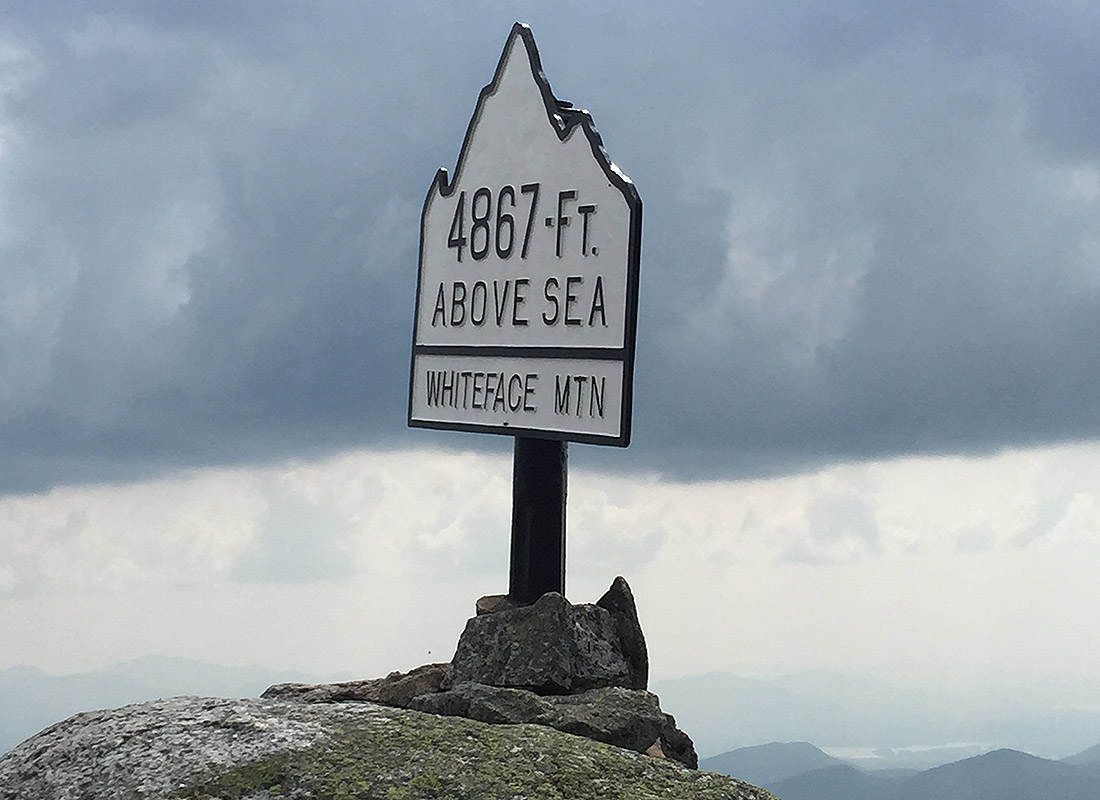
A peak will never surprise you.
The moment you reach the summit of a tall mountain will always arrive long after you expected. You may even be reluctant to let yourself believe that your goal has finally been achieved. Only that 360 degree view will convince you there is no more rock to ascend.
False peaks are infamous among hikers and climbers. Many times during an ascent the top appears imminent, only to find another higher elevation still requires your effort and sweat.
Most mountains of substance yield many clues that you are nearing their crown. The humidity of the valley fades as you climb. The canopy disappears as the trees grow smaller and less leafy. Views become visible through the thinning forest cover and distant weather reveals itself. You are suddenly aware it’s raining in a valley 10 miles away and you wonder why you didn’t notice it sooner?
The water sources that were gushing in the valley turn to trickles, if you can find them at all – a last chance to camel up. The air pressure drops suddenly, and then drops again.
Air becomes fresher, cooler, and it moves faster. Swirling winds make your clothing flap uncontrollably and openings need to be sealed tight. Your headwear must be secured or removed altogether. Hoods are better than hats.
Mountain peaks are bright. Rock reflects the light and you realize that you’re heavily exposed to the sun even in overcast conditions.
The sweat you built up earlier in the climb is cooled by the persistent wind and a chill goes through you. The feeling does not last long as your body consumes the energy needed to stay warm, but you are burning through your stored fuel quickly now.
Reaching the top you are simultaneously filled with feelings of nirvana and trepidation.
All the answers to questions you never considered are revealed. The whole topography of the region is laid before you. It’s a living map! Distant lakes look glassy and still. The forest below is spotted with areas of sun and shade that creep slowly across the landscape.
The thru-hiker sees both the ground they have just covered and their destination in near perfect clarity, as much comforted by their achievements as daunted by imminent challenges in the hours and days ahead.
Your achievement sinks in and you’re overwhelmed with the majestic views. The wind breaking the peak is fast, and it quickens your pulse, and reminds you that you cannot linger here for long.
Peaks can only be rented, never owned. While they provide immeasurable inspiration, they lack the necessities of life. Nothing thrives here for very long. Those living things that do reside here in perpetuity, short pine trees and arctic lichens, pay a heavy price to set up shop on a mountain peak. Their growing season is perilously short. More of their energy is devoted to surviving than to thriving. You are multitudes more fragile than these hearty beings. You cannot stay.
Every moment you remain at altitude drives up the risk factors for the rest of your day.
Ascent is tough, but descent is no picnic either. Your water supply is low but you will need less of it coming down. You will need to eat soon, but top priority is to get out of the exposed areas and back under the relative safety of the forest canopy.
You begin to come down from the exhilarating feeling of the peak. You think more clearly and logically. Analytical skills return and you are faced with new challenges.
“I’m four hours from camp, but I only have three hours of daylight left, less if I stop to eat.” you realize.
The other side of the mountain may not resemble what you faced on the way up. It may be steeper, more rocky, more slippery – not what you expected.
Your knees are the first to weaken, but you need them the most! It is a cruel deficiency in the human climber anatomy that knees are heavily required for both ascents and descents. It occurs to you that we weren’t really designed to hike over mountains, and that you are hacking your body to accomplish a goal for which it was never really fully intended.
The euphoria of the day’s achievement is rapidly eclipsed by the serious situations that need resolutions. Water is most important. Stopping at the first pure source to camel up is a must. Carrying too much will only increase your weight and make stopping yourself tougher. Take only what you need to reach camp and no more.
Hiking faster helps, but it increases risks too. The push of gravity gives you a false sense of stamina. The real challenge of the descent is braking.
As you near camp, the day’s euphoria has been replaced with a dull body ache. You will need to endure a bit a pain while setting up your shelter. You will refill your water and eat in the dark, enjoying every morsel.
If you’re a thru-hiker, you wake up the next day and do it all over again.
Copyright © 2024 All rights reserved
 Rushbrooke Adventure